Convention Centre vs Hotel for Corporate Events: What to Consider
Choosing a venue for a corporate event involves more than finding a suitable hall. The space, facilities, location, and overall cost all affect how smoothly the event runs. Both convention centres and hotels can host conferences, seminars, product launches and business meetings, but each offers different advantages.
Convention centres generally suit large conferences and exhibitions, while hotels offer meeting spaces with accommodation, catering and event support. Your choice depends on the number of attendees, your budget and the facilities your event requires. Comparing factors such as space, technology, catering, location and overall cost will help you find a venue that suits your needs.
Event Venue Space and Guest Accommodation
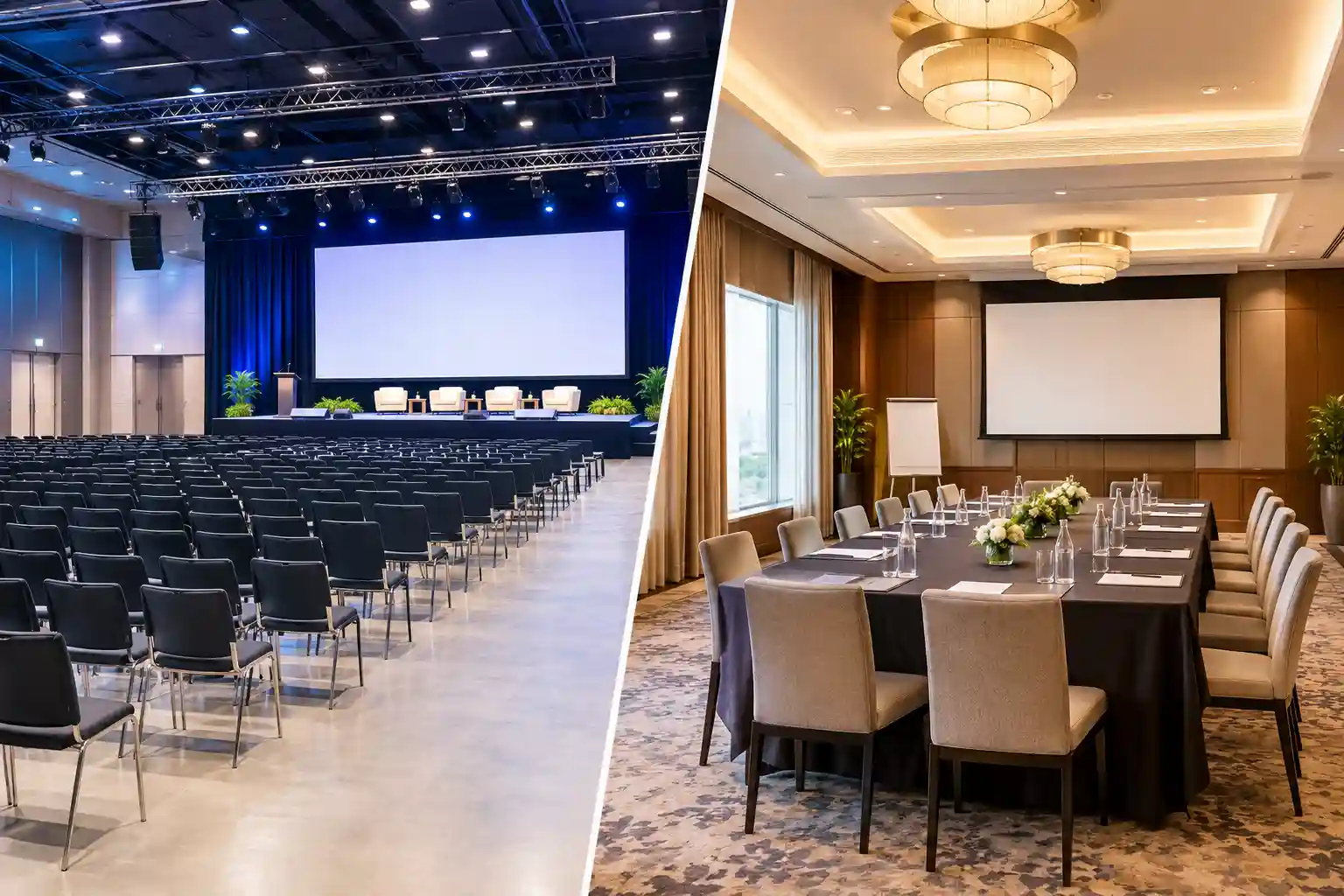
Convention centres usually have large open halls with high ceilings and few pillars, so sightlines stay clear and layouts are easy to change. That makes theatre, classroom, or banquet seating workable for big groups. Hotels tend to have one ballroom and several smaller meeting rooms. This setup suits mid-sized groups and events that need breakout sessions; however, a very large audience can strain the space. Before you book a venue, ask for floor plans with capacity figures for each seating style, because a room’s stated maximum often decreases once you add a stage, registration desk, or exhibition stands.
Audio-Visual Facilities and Technology
Convention centres usually have built-in lighting, sound and projection systems, reducing the need for additional technical setup. Hotels often supply basic equipment and bring in outside suppliers for complex productions, which can add cost and coordination. Whichever you choose, ask about microphones, screens, stage lighting, internet capacity, and power backup. Confirm who operates the equipment on the day and whether a technician stays in the room throughout all sessions. Also ask when you can test everything before doors open, because a rehearsal with your own slides, clips, and videos catches small problems early.
Parking Space and Accessibility Options
Hotels in city centres are easy to reach, but parking can be limited or charged by the hour. Convention centres have large parking areas, which helps when hundreds of guests arrive within the same hour. Whichever you choose, note the road access, entry points, lifts and ramps for guests with mobility needs. Check travel time from the airport or station, and ask whether shuttle services or nearby public transport are available. If you expect many cars, find out whether the venue can arrange valet parking or overflow lots for busy mornings and late arrivals.
Guest Comfort and Accommodation
Delegates who travel from other cities can sleep, eat, and attend sessions without travelling between venues. Convention centres focus on the event, so overnight guests usually stay elsewhere and need transport. For a one-day seminar with local attendees, this matters little. For a two-day conference with outstation guests, it matters a great deal. Tired travellers who must commute each morning tend to arrive late and leave early. Ask hotels about group room rates, and ask convention centres which nearby partner hotels they work with or can recommend.
Catering and Dining Options
Hotels bring established kitchens, restaurants and room service, which suits events with varied meal needs and long programmes. Convention centres offer catering, often with more freedom to choose your own caterer or menu. Neither option is better than the other, so ask the right questions. How does the venue serve hundreds of guests at once without long queues? Are outside caterers permitted, and is there a fee for bringing them in? Request a tasting where possible, because the menu you sample is the one your guests should receive.
Event Privacy and Planning Flexibility
A convention centre often hosts one event at a time, giving your group more privacy and control over layout, timing and branding. Hotels are shared spaces. Other guests, weddings and conferences may be in the building, and setup times can be restricted. That can mean noise, crowded lobbies and less room for branded signage. On the other hand, hotels may offer flexible meeting room sizes for smaller sessions, which helps when your programme splits into groups. Ask both venues what else is booked on your dates, how early you can access the room, and what limits apply to signage.
Professional Event Coordination
Hotels have conference and banqueting teams used to coordinating rooms, meals and accommodation together. Convention centres have technical and operations staff who understand large-scale setups. Both can provide good support, depending on the team assigned to your event. Ask who your main point of contact will be before and during the event. Find out whether support is included in the price or charged separately, and how many staff will be there on the day. Speak to previous clients, since their experience can tell you more.
Cost and Venue Benefits
Price comparisons can mislead. A hotel may offer a package that bundles room hire, meals and accommodation, making it convenient but harder to compare individual costs. A convention centre may have a lower hire cost but require you to arrange catering, equipment or rooms separately. Compare the full cost of the event. Ask what each quote includes, and look for extras such as cleaning, security, power, overtime and service charges. Request quotes so you can compare them fairly, and ask about cancellation and refund terms before you sign.
Which Venue Suits Which Event?
Boardroom meetings, training sessions and executive retreats often suit hotels. Large conferences, annual meetings, product launches and seminars with many local attendees often suit convention centres. Multi-day events with outstation delegates usually favour hotels, unless nearby accommodation is easy to arrange.
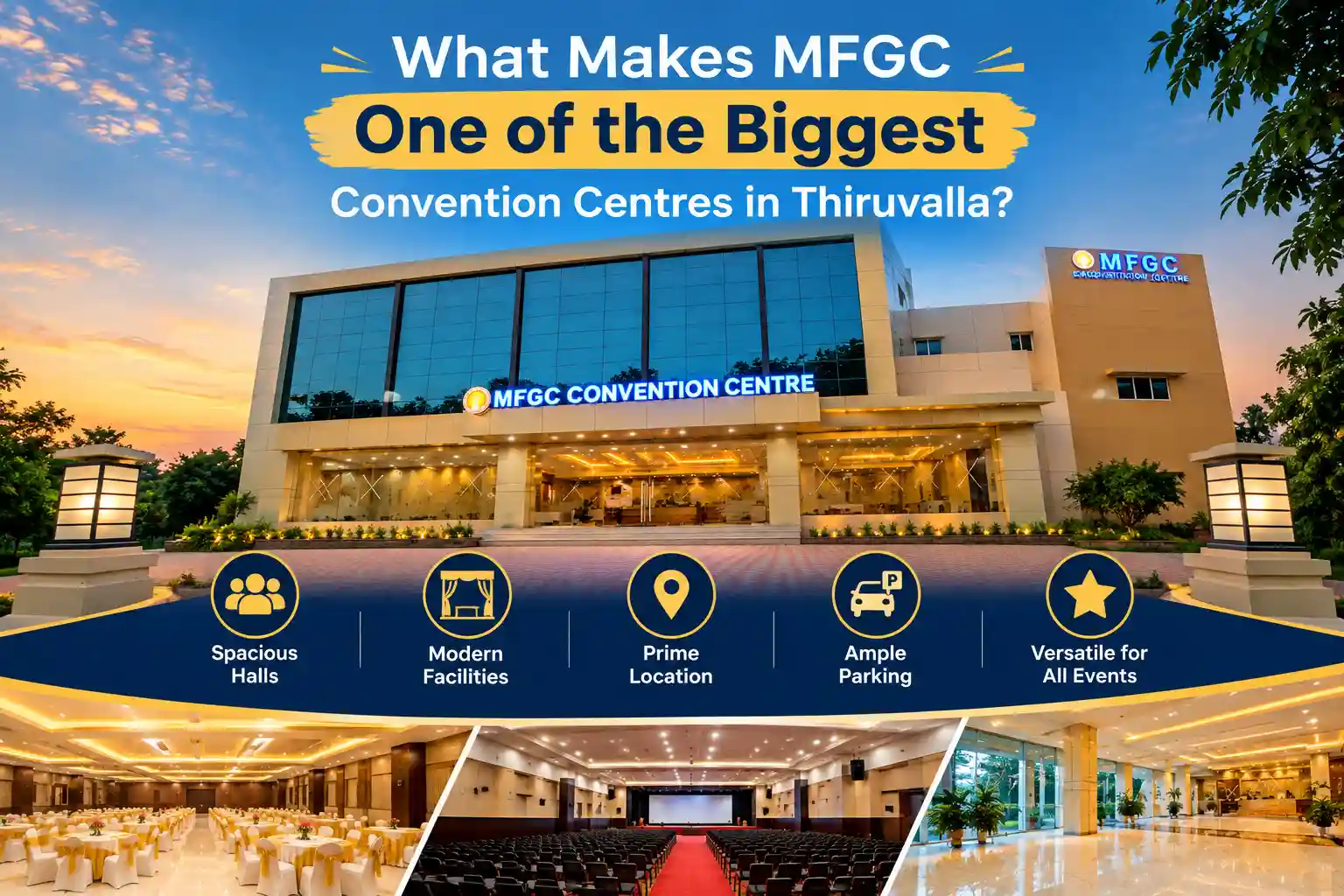
If you are looking for conference halls in Thiruvalla, MFGC Convention Centre is worth considering. Located on Muthoor Road, Kavumbhagam, the 33,000-square-foot venue has halls that can accommodate more than 600 guests. It offers a Function Hall and a Banquet Hall, with lighting, sound, and audiovisual facilities, power backup, and dedicated parking. You can book a hall by the hour or for a full day, depending on your event.
How to Decide: Questions to Ask Before You Book
Start with your guest count and the layout you need. Then consider your goals. A launch needs strong stage and AV capability, while a training day needs comfort and quiet. Think about who is travelling and whether they need rooms. Finally, set a total budget and ask each venue for a written quote that lists exactly what is included.
Visit your shortlisted venues, test the sound and screens if you can, and check parking and access at the time of day your event will run. The right choice is the venue that fits your event, not the one with the longest list of features. To check availability or arrange a visit at MFGC, call +91 9400909220 or visit our booking page.